 +593 99 128 3079
 Toll free: +1 866 987 0876


Santa Marta, Colombia & The Lost City Trek: Everything You Need to Know
Discover the best tips for your journey to the famed Lost City on the Colombian coast, from what to do on arrival to cultural highlights to how best to navigate the trails, and much more.
 Johanna Alvear | Updated: July 31, 2026 | Time to read: 8 min

This blog was created together with Génesis Navarro.
Out of all the possibilities for excitement and adventure in Colombia, the multi-day trek to the famed Ciudad Perdida (Lost City) is one of the most enticing. Adventurers flock from around the world to test their endurance on a jungle hike to this ancient indigenous city near Tayrona National Park, on the Colombian coast. In terms of grandiosity, it is only rivaled by Inca fortresses like Machu Picchu in Peru.
To get there, visitors must first arrive in the coastal town of Santa Marta—itself a prime holiday destination. Founded in 1525, it was the first ever New World settlement in Colombia, meaning it’s filled with rich history and culture. Exploring its historic plazas and well-preserved colonial churches is the best way to start any adventure to Ciudad Perdida. Below, you’ll find everything you need to know to enjoy your time both in Santa Marta and on the Lost City trek.
Table of Contents
Santa Marta: A Destination in Its Own Right
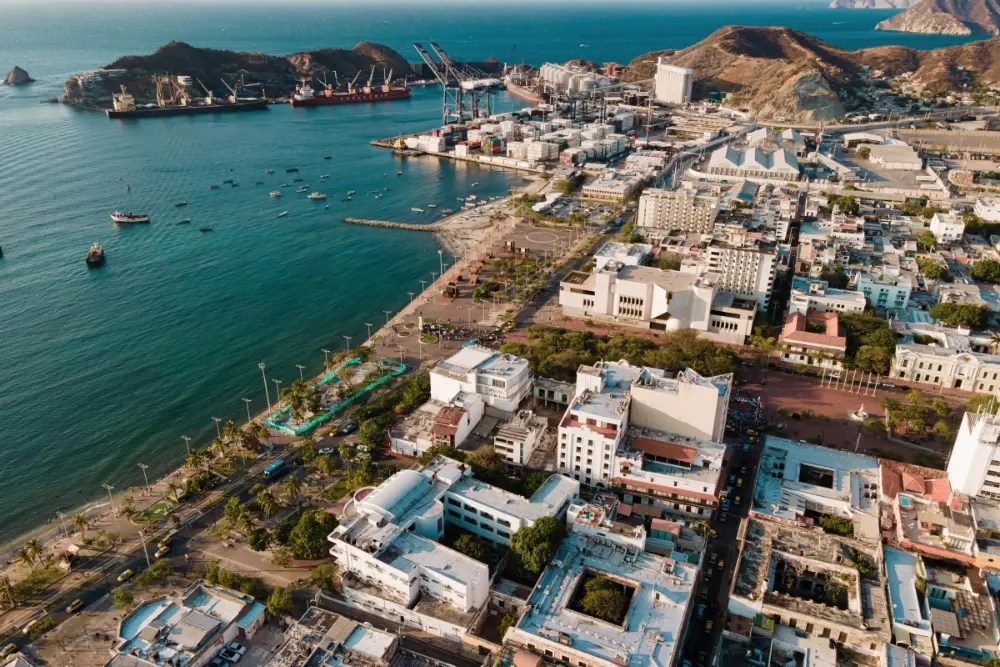
Set on Colombia’s Caribbean coast, Santa Marta is more than a gateway to Ciudad Perdida—its historic center clusters around the whitewashed Santa Marta Cathedral, while the malecón and marina draw locals in the evenings for sea breezes, street food (try a shrimp cocktail), and music.
A short ride north leads to the fishing village of Taganga for diving and sunset views, and farther along, the jungle-fringed beaches and hiking trails of Tayrona National Natural Park. With direct flights and road connections to Bogotá and Medellín, it’s an easy place to pause before or recover after the trek.
Ciudad Perdida: A Trek Like No Other
The trek to Ciudad Perdida is a 4- or 6-day guided hike through the humid foothills of the Sierra Nevada de Santa Marta, covering roughly 27–30 miles (43–48 km) round-trip along muddy jungle paths, river crossings, and long ascents, including the final climb up more than 1,200 stone steps to reach the ruins; along the way, hikers sleep in simple open-air camps, pass through Indigenous territories, and contend with heat, insects, and steep terrain that make the journey physically demanding but profoundly rewarding.
History of Ciudad Perdida
Believed to have been founded around 800 CE by the Tairona civilization, centuries before Machu Picchu, Ciudad Perdida remained hidden in the coastal jungles until its rediscovery in 1972, when local treasure hunters stumbled upon its terraces and stone pathways. Today, it stands as one of Colombia’s most significant archaeological sites, still regarded as sacred by Indigenous groups like the Kogi, who consider it part of a living cultural landscape rather than a relic of the past.
Ciudad Perdida Trek: Where it Begins
Most journeys to Ciudad Perdida begin in Santa Marta, where many itineraries allow time on Day 1 to wander the historic center around the Santa Marta Cathedral, grab a seafood lunch on the marina, or slip over to Taganga for a quick swim before heading inland. Leaving Santa Marta, the route shifts from the Caribbean coast to jungle foothills as you drive toward the trailhead, marking the transition from coastal ease to the demanding, multi-day trek through the Sierra Nevada de Santa Marta.
When you’re ready to start the hike, a local guide will lead you. Guided tours are required for the Lost City trek. These are local experts (often members of indigenous communities) who promote preservation of the sacred site and ensure a safe experience. During the trek, they’ll happily share insights into the history, spirituality, and cultural significance of the Lost City.
The Journey Through the Sierra Nevada
Though one of the most incredible journeys in Colombia, the trail to Ciudad Perdida is physically demanding. It features long stretches of humid jungle hiking, repeated river crossings, and sustained climbs over uneven ground. Within the rainforest of the Sierra Nevada de Santa Marta, the path cuts through thick vegetation where the air is heavy and the sounds of nature shift between insects, birds, and the occasional movement of monkeys overhead.
Each day ends at simple trail camps set along the route, where trekkers sleep in shared wooden shelters with hammocks or bunk beds, rinse off in cold-water showers, and gather for cooked meals before turning in early. The lack of modern comforts, limited electricity, and steady rhythm of walking, eating, and resting create a routine that feels removed from daily life without trying to romanticize the conditions.
Colombia Travel Favorites



Discovering the Lost City
On the final day, hikers set out before dawn to reach Ciudad Perdida, climbing more than 1,200 uneven stone steps that rise sharply from the forest floor to a series of terraces carved into the mountainside. At the top, the site reveals a network of circular platforms, narrow stairways, and open plazas built by the Tairona people around 800 CE, all constructed from stone and earth without modern tools.
Time at the site is spent walking between terraces and listening to guides explain how the city functioned, from its layout to the agricultural and spiritual practices of the Tairona, as well as its continued importance to Indigenous groups like the Kogi, who still regard the area as part of a living cultural landscape rather than a preserved ruin.
Ciudad Perdida & Indigenous Heritage
The trek to the Lost City is more than just a physical journey. It’s also a cultural exchange. The Indigenous Kogi, Wiwa, and Arhuaco communities still reside in the Sierra Nevada and are descendants of the Tayrona civilization. As guardians of the Lost City (and Tayrona National Park), these communities maintain their ancestral lands and traditional practices, emphasizing harmony with nature. Meeting these indigenous groups along the way provides a rare and respectful glimpse into their spiritual way of life, which is rooted in deep respect for nature.

For many trekkers, these interactions are among the most memorable parts of the journey. They create a sense of connection and respect for the local culture, which itself is a hidden gem of Colombia.
Tips for the Trek
Here are some tips to make your trek to the Lost City as enjoyable and safe as possible:
- Pace yourself early: Keep a slow, steady pace on Day 1, as the exposed rolling terrain is deceptive—it may look easy, but the heat, humidity and sun can drain you. Save your legs for the steep jungle stair climb into Ciudad Perdida later on.
- Hydrate constantly (with electrolytes): In the thick humidity of the Sierra Nevada de Santa Marta, drink water nonstop and add electrolytes to avoid fatigue, cramps, and heat exhaustion.
- Engage with your guides: Ask your guides questions about local traditions, the land, and the trek’s history—remember, this area is indigenous land, and knowing the will lead to a more responsible and rewarding experience.
- Pack light but purposefully: Carry only essentials like quick-dry clothes, a headlamp, bug spray, and river-crossing sandals, because every extra pound feels heavier with each muddy, uphill mile/kilometer.

Final Thoughts on Trekking to the Lost City
If you’re looking for a transformative travel experience, the Lost City Trek in Santa Marta, Colombia, should be on your list. From the diverse landscapes to the cultural connections, every aspect of the journey will leave you feeling inspired and enriched. So lace up your boots, prepare for a challenge, and get ready to step into the footsteps of an ancient civilization.
Frequently Asked Questions
When is the best time to visit Santa Marta and do the trek?
December to March is generally drier, with more stable trail conditions; April to November brings heavier rain, muddier paths, and higher river levels, though the landscape is greener and there are often fewer hikers.
How difficult is the trek to Ciudad Perdida?
It’s considered moderately to highly challenging due to heat, humidity, elevation changes, and long daily hikes; you don’t need technical skills, but a solid fitness level and comfort with multi-day trekking conditions are important.
Do I need a guide for the trek?
Yes—independent trekking is not permitted; all visitors must go with an authorized guide service, which includes logistics like meals, accommodations, and cultural access to Indigenous territories.
What should I pack for the trek?
Bring lightweight, quick-dry clothing, sturdy hiking shoes, a headlamp, insect repellent, sunscreen, a reusable water bottle, and electrolyte supplements; pack minimally, as you’ll carry everything in hot, humid conditions.
How do I get to Santa Marta?
Santa Marta has a small international airport with direct flights from cities like Bogotá and Medellín, plus bus connections along the Caribbean coast for travelers coming overland.
Further Reading
- Colombia Vacation: Trekking the Majestic Andes
- Tayrona National Park, Colombia: Eco-Tourism and Nature
- Colombia’s Caribbean Coast: Tropical Exploration
