+593 99 128 3079
 Toll free: +1 866 987 0876


The Amazon Rainforest by Country: Highlights of Earth’s Green Lung
From wildlife and the environment to indigenous culture and conservation, this guide delivers all the info you need to plan the perfect Amazon adventure in Colombia, Peru, and Ecuador.
 Chris Wallace | Updated: September 21, 2026 | Time to read: 12 min

More than a jungle, the Amazon rainforest is a great “green lung” that helps regulate Earth’s climate while promoting biodiversity. The wildlife here is unrivaled, as the Amazon is home to 1 in 10 known species on Earth, as well as many unknowns. Famously, it’s also a bucket-list destination for global adventurers. Below you’ll find more details of this global life support system, its highlight regions/national parks, conservation info, and everything else you need to know to plan the Amazon trip of a lifetime.
Table of Contents
The Amazon Rainforest: An Overview
The Amazon rainforest is big—really big. It spans around 1.2 million square miles (5.5 million sq km), covering 40% of South America. This rainforest encompasses a whopping nine countries: Bolivia, Brazil, Colombia, Ecuador, French Guiana, Guyana, Peru, Suriname, and Venezuela. Brazil and Peru have the largest share of the forest, followed by Colombia, Bolivia, and Venezuela.
The rainforest itself develops around the Amazon River basin. High temperatures along the equator here favor the development of dense and lush vegetation. That means it’s always green, year-round. Known as the “green lung of the Earth,” it’s crucial to help our planet maintain a climate balance. It does this by releasing oxygen, regulating rainfall, and (critically) acting as a “carbon sink,” absorbing large amounts of C0₂.
When to Visit the Amazon Rainforest
The Amazon is hot (75–90°F/ 24–32°C) year-round, but timing varies by country. In Colombia and Ecuador, drier months (Dec–Mar, Jul–Aug) mean better hiking; wetter months improve river travel. Peru and Bolivia are best May–Oct (dry season, more wildlife visibility). Brazil’s vast Amazon varies, but Jun–Nov is generally drier with fewer mosquitoes. Wet seasons (Nov–Apr) bring lush scenery and higher water levels across all regions, ideal for boat access but with heavier rains and humidity.
The Amazon Rainforest: Climate Change & Conservation
We live in an age where environmental causes and the health of our planet are top of mind. And you can’t have an honest discussion about climate change without considering factors like the Amazon rainforest. It acts as both an emissions buffer and a carbon-capture mechanism. In other words, climate stability depends on the health of the Amazon.
As for conservation in the Amazon, it’s driven by governments, indigenous groups, and organizations like the Amazon Conservation Association and the WWF. These groups protect biodiversity through reserves, reforestation, and anti-deforestation programs. Initiatives such as Brazil’s protected areas network and Peru’s community-led conservation help curb illegal logging.
Visitors can support eco-lodges, avoid wildlife exploitation, reduce plastic use, and choose responsible tour operators that reinvest in local communities and conservation efforts.
Start Planning Your South America Jungle Expedition
Our expert travel designers plan custom Amazon trips.They connect you with local culture, nature, and meaningful moments.We handle every detail with care.
Highlights of the Colombian Amazon
A journey into the Amazon is a glimpse into the heart of Mother Nature’s majesty. The only thing travelers need to consider is where to go. Each region/country offers its own highlights—so let’s start with Colombia.
The Amazon covers approximately 40% of Colombia, mostly in the southern half. Crisscrossing this region are some vital rivers and tributaries: Putumayo, Caqueta, Orinoco, Apaporis, and, of course, the mighty Amazonas itself.

Leticia
The best base for exploring the Colombian Amazon is Leticia, a triple-border town on the frontier of Colombia, Peru, and Brazil. A laid-back jungle hamlet, it’s inaccessible by road, and the most convenient transport when you’re there is by boat. The Amazon River runs by Leticia to/from the other countries, acting as a kind of aquatic superhighway.
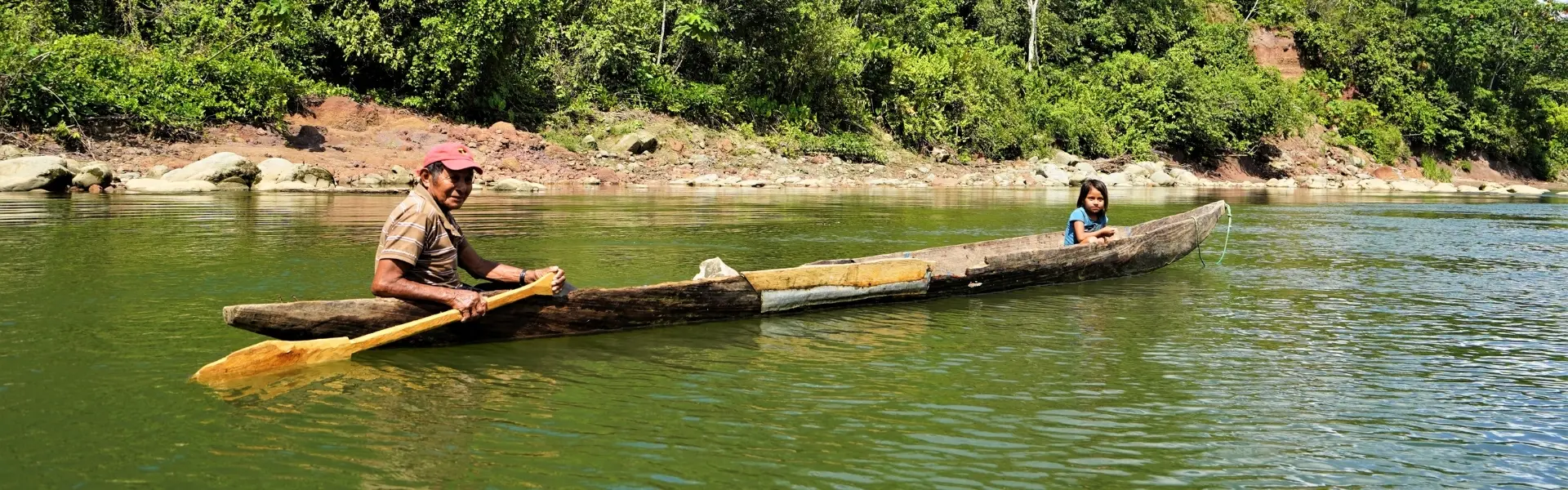
Many of the local residents here belong to Indigenous tribes such as the Ticunas, the Yaguas, and the Cocanas. Deeper in the forest, you’ll encounter indigenous peoples living a hunter-gatherer lifestyle unchanged for generations.
Puerto Nariño
Two hours upriver from Leticia, Puerto Nariño is an eco-friendly village, home to members of local indigenous groups. With a population of just over 10,00 people, Puerto Nariño is calm and peaceful—the perfect base to experience the natural wonders of the Amazon.
Nearby, Tarapoto Lake is excellent for swimming with pink dolphins and great for piranha fishing (don’t worry; they don’t go after people). And adventure-sports lovers will enjoy wakeboarding right on the Amazon River. Close to Puerto Nariño is one of Colombia’s largest National Parks, Amacayacu. It’s home to hundreds of animal species, like spider monkeys, river otters, and even jaguars.
Highlights of the Ecuadorian Amazon
Ecuador’s share of the Amazon Rainforest may be relatively small, but it is the largest natural region in the country, covering 40%-50% of its landmass. Spanning six provinces—Sucumbíos, Orellana, Napo, Pastaza, Morona Santiago, and Zamora Chinchipe—it’s one of the country’s most remote and least populated areas, with fewer than 800,000 inhabitants. Despite its size, the Ecuadorian Amazon is a vital part of the greater basin, offering the same rich biodiversity and opportunities for adventures and expeditions found across the wider rainforest.
Towering trees—often exceeding 160 feet (50 m)—dominate the landscape, alongside rich ecosystems filled with species like ceibo, sande, and mahogany. In many areas, firm ground gives way to flooded forests, where rivers narrow into winding channels and lagoons, making canoe travel essential. Much of this environment is protected within vast reserves, including Yasuni National Park, one of the most biodiverse places on Earth, as well as the Cuyabeno and Napo reserves, where visitors can experience the Amazon at its most untamed.
Below are more details of each of the aforementioned highlights.
Yasuni National Park
Covering roughly 10,468 square miles (27,111 sq km), the Yasuni National Park—a UNESCO Biosphere Reserve—is one of the most biodiverse tropical forest regions on Earth. Uniquely positioned where the Amazon, the Andes, and the equator converge, it holds profound cultural significance as the homeland of the Waorani people. There are also two uncontacted groups living within the vast Tagaeri-Taromenane Intangible Zone, a protected area in the park designed to safeguard such indigenous groups, which also includes the Kichwa, Shuar, and settler communities.

Cuyabeno National Park
Spanning approximately 2,280 square miles (5,905 sq km), the Cuyabeno Wildlife Reserve in northeastern Ecuador’s Sucumbíos province is a biodiversity powerhouse. It’s home to more than 550 bird species, 350 fish, 60 orchids, 10 types of monkeys, and a wide range of reptiles, including anacondas, caimans, and river turtles. Its diverse ecosystems—featuring over 12,000 plant species—support iconic wildlife such as tapirs, pink river dolphins, and the prehistoric-looking hoatzin. Defined by a vast aquatic network of 13 lagoons, rivers, and flooded forests, Cuyabeno rivals nearby Yasuni National Park in its biodiversity.

Napo Province
The Amazonian province of Napo is another wildlife hub with excellent opportunities for outdoor adventure. A renowned birding destination (keep an eye out for parrots, tanagers, and antbirds) Its dense primary and secondary forests are home to towering trees, medicinal plants, and abundant wildlife. Scenic rivers and trails here lead to standout natural attractions like the waterfalls of Hollín, Pimpilala, Latas, and Yanayacu. Blending rich ecosystems with cultural experiences, Napo offers is both an accessible and deeply immersive gateway into the Ecuadorian Amazon.
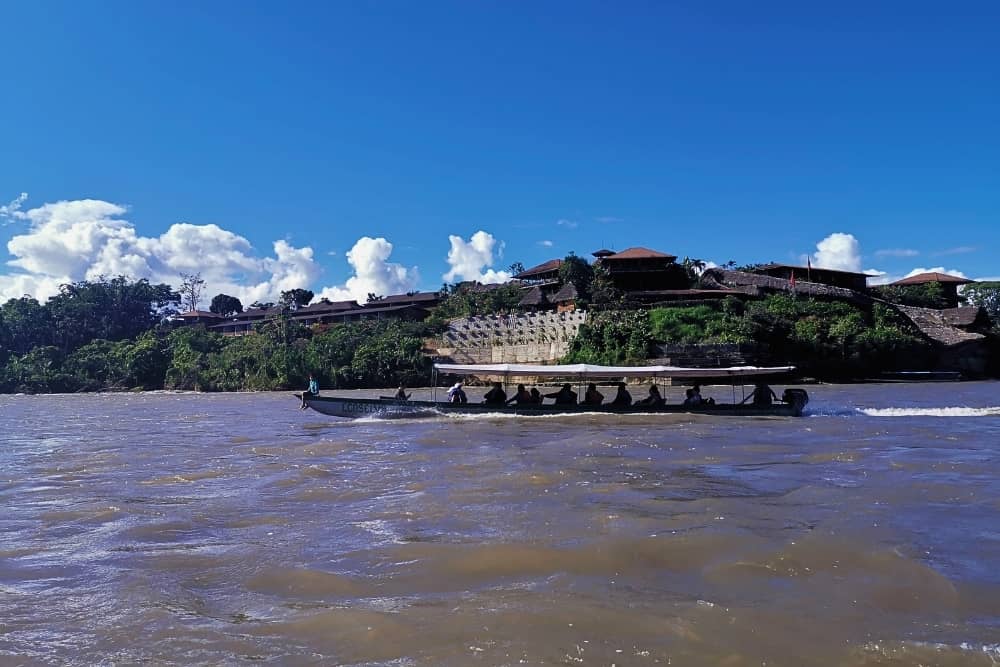
Highlights of the Peruvian Amazon
Holding the second-largest share of the Amazon Rainforest after Brazil, the Peruvian Amazon is one of the most accessible and rewarding regions to explore, with two primary entry points: Iquitos in the north and Puerto Maldonado in the south. The latter provides access to extraordinary areas like the Tambopata National Reserve and the lowland regions of Manu National Park, both known for their exceptional biodiversity and immersive jungle experiences.
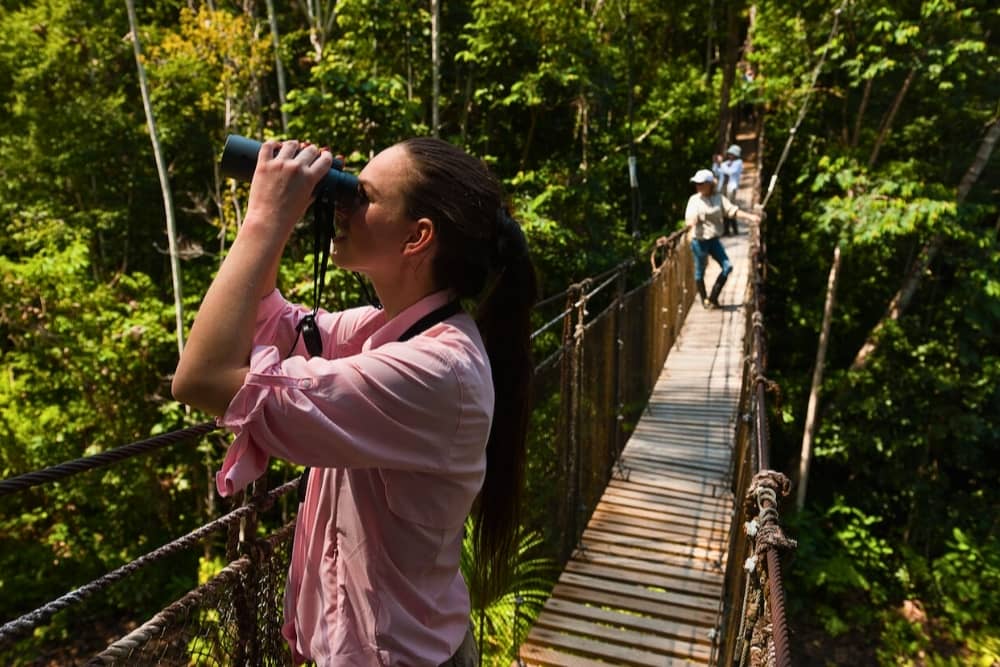
The southern Amazon around Puerto Maldonado is especially famous for its clay licks, where hundreds of brightly colored parrots gather to consume mineral-rich clay that helps neutralize toxins in their diet. Beyond this spectacle, the region features serene oxbow lakes that shelter rare species such as giant river otters, alongside vast tracts of protected rainforest—nearly 15% of Peru’s land area.
Key conservation areas include Pacaya Samiria National Reserve and Tamshiyacu Tahuayo Reserve, making the Peruvian Amazon a vital stronghold for wildlife and ecological preservation.
Tambopata National Reserve
Located in southern Peru near Puerto Maldonado, the Tambopata National Reserve spans about 1,060 sq kmiles (2,745 sq km) of rainforest nourished by the Tambopata and Heath rivers. Its proximity to the city allows visitors to reach wildlife-rich areas in under an hour, making it one of the most accessible Amazon destinations for short stays.
Once in the park, guided tours reveal vibrant birdlife, monkeys, towering trees, and clay licks filled with colorful parrots. Connected to vast conservation corridors including Madidi National Park and Bahuaja Sonene National Park, Tambopata supports nativer wildlife across a massive protected landscape. For the deepest immersion and most memorable jungle experience, stay at premier eco-lodges like the Tambopata Research Center.
Tamshiyacu Tahuaco Reserve
Located about 93 miles (150 km) from Iquitos, the Tamshiyacu Tahuayo Reserve was established through local conservation efforts to protect rare species like the red uakari monkey, known for its blazing red face and bald head. The reserve encompasses both flooded and upland forests rich with emergent trees, orchids, and bromeliads, supporting a wide variety of wildlife.
Visitors may encounter multiple monkey species—including howlers, capuchins, tamarins, and pygmy marmosets—as well as an impressive array of birdlife such as macaws, toucans, hoatzins, and vibrant tanagers.
Pacaya Samiria National Reserve
Accessible from Iquitos, the Pacaya Samiria National Reserve spans just over 7,700 square miles (19,942 sq km), making it one of Peru’s largest protected areas. It’s also a prime destination for rainforest cruises through its seasonally flooded forests. Known as the “Forest of Mirrors” for its dark, reflective waterways, the reserve offers prime scenery and rich wildlife, including pink river dolphins, monkeys, various bird species (such as macaws, toucans, and herons), and towering trees draped with orchids and bromeliads.
Iquitos Amazon Jungle Region
Iquitos is the largest city in the world inaccessible by road—reachable only by air or river—and serves as a timeless gateway to the northern Amazon. Known for its colorful rubber-boom architecture and festive jungle atmosphere, the city is both a destination in its own right and a key launch point for Amazon cruises and lodge-based rainforest expeditions in the surrounding region.
Manu National Park
This UNESCO World Heritage Site is one of the most biodiverse places on Earth, home to more than 15,000 plant species, over 1,000 birds, and hundreds of mammals, reptiles, and amphibians. These include jaguars, giant otters, various monkeys, macaws, harpy eagles, and the flamboyant Andean cock-of-the-rock.
The region is divided into the strictly protected national park—largely off-limits except to Indigenous communities, scientists, and rangers—and the surrounding Reserved and Cultural Zones, where visitors can responsibly experience the wider Manu Biosphere Reserve.
Explore the Amazonia with Rebecca Adventure Travel

 5 Days
 Peru
Peru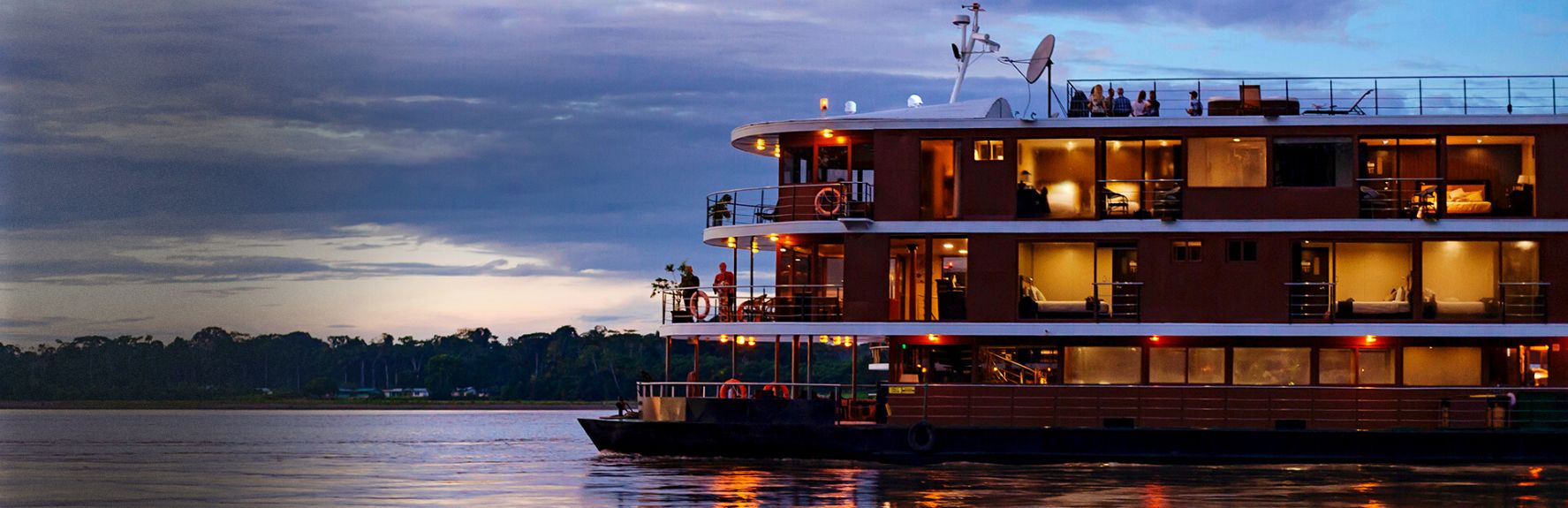
Interested in more rainforest adventures? There are also fantastic cruises to enjoy on the Amazon River! You can contact us for more information.
Frequently Asked Questions
Where is the Amazon rainforest located?
The Amazon spans nine South American countries, with most of it in Brazil. It also stretches into Peru, Colombia, Ecuador, Bolivia, Venezuela, Guyana, Suriname, and French Guiana, forming the world’s largest tropical rainforest and a vital ecological region.
Is it safe to visit the Amazon rainforest?
Yes—provided you’re in the company of certified guides and reputable operators. Guided Amazon tours prioritize safety with proper equipment, trained naturalists, secure eco-lodges, and well-planned routes. Travelers should follow instructions, respect wildlife, stay hydrated, and prepare for a humid, remote environment.
When is the best time to visit the Amazon rainforest?
The Amazon is a year-round destination. June to November offers lower water levels and more hiking opportunities, while December to May provides richer wildlife sightings by canoe. Your ideal time depends on preferred activities—trekking, boating, birding, or rainforest expeditions.
What are some facts about the Amazon rainforest in South America?
The Amazon covers over 1.2 million square miles (5.5 million sq km) and produces around 20% of the world’s oxygen. It’s home to the planet’s highest biodiversity, thousands of rivers (including the Amazon itself), countless indigenous communities, and ecosystems so complex they regulate global climate and weather patterns.
What animals live in the Amazon Rainforest?
The Amazon is the native habitat of jaguars, tapirs, sloths, pink river dolphins, giant otters, anacondas, macaws, poison dart frogs, caimans, and millions of insects. Its unrivaled biodiversity includes species found nowhere else on Earth, like pink river dolphins, giat river otters, and massive water lillies that can reach 10 feet (3 m) in diameter.
Ready to Plan Your Journey Through the Tropical Rainforest?
Whatever you seek from your adventure through the lungh of the planet, our expert travel designers create experiences that connect you with people, nature, and purpose, with every detail handled with care.
Related Posts