 +593 99 128 3079
 Toll free: +1 866 987 0876


Adventure in the Amazon Rainforest: Following Will Smith Through Ecuador
The Hollywood superstar has added “travel host” to his list of credits, and you can visit every exotic Ecuadorian locale he did on a journey into the Amazon.
 Chris Wallace | Updated: July 31, 2026 | Time to read: 8 min
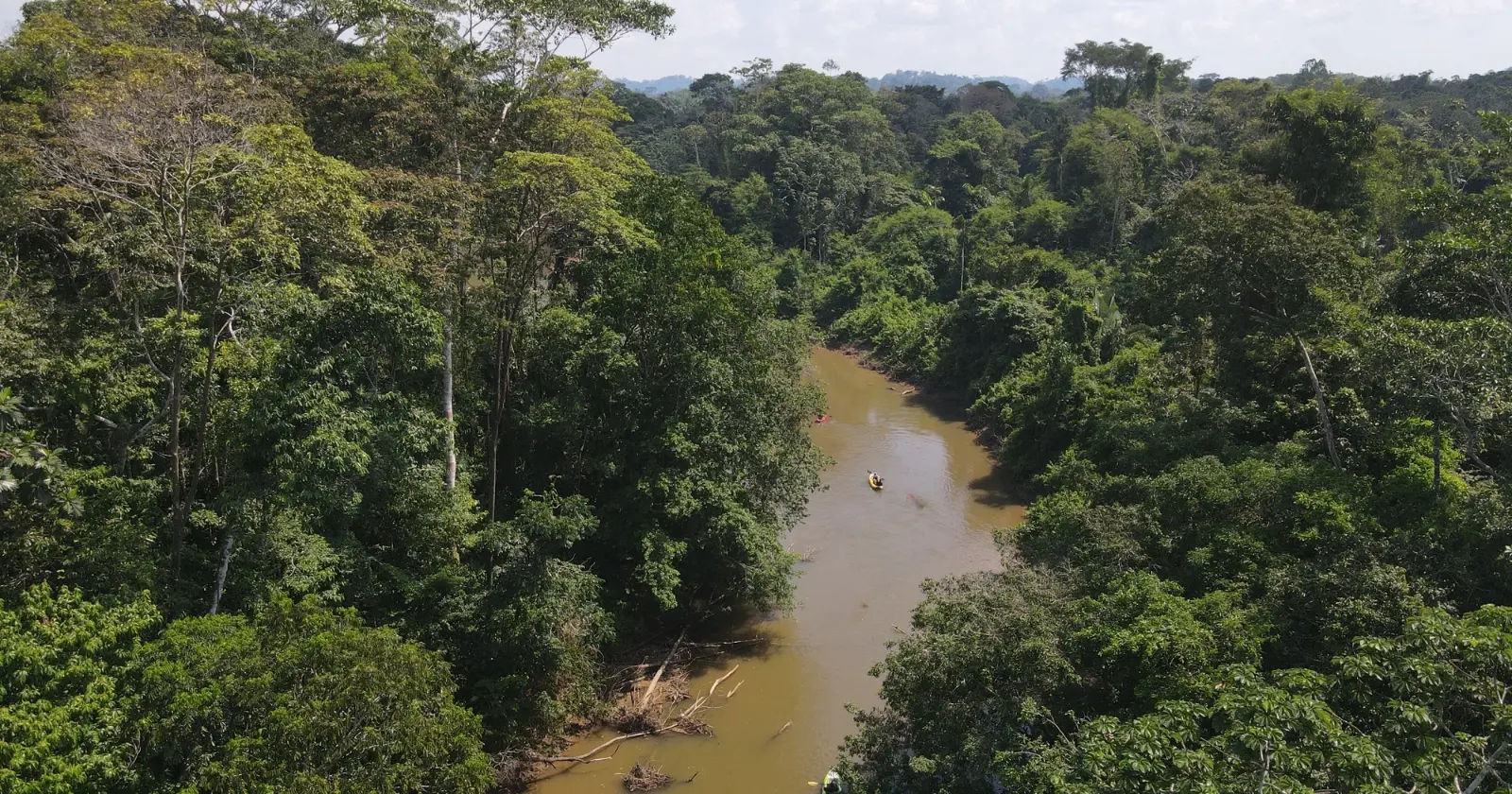
Will Smith has worn many hats over the course of his 40+ years in show business: Musician, sitcom star, movie star, musician (again), sports team owner, Hollywood pariah, and musician (once again). More recently, he’s added a new title to his resume: adventurer. That’s how he presents himself in the National Geographic original series “Pole to Pole.” This 7-episode documentary series began airing in January 2026. As the title suggests, the show follows Smith globetrotting from the South to the North Pole, hitting all seven continents in the process.
After beginning in the extreme cold of Antarctica, episodes 2-3 see Smith headed for more tropical climates in the Amazon rainforest of Ecuador. The episode is full of adventure and exotic locales, but perhaps most surprising is that nothing Smith does is out of reach for your average, non-movie-star traveler. You could book a trip to Ecuador tomorrow and soon be visiting the same rainforests and meeting the same indigenous Waoroani tribe members he did. Also like Smith, you might even encounter the biggest snake in the world: the giant green anaconda.
Below, we break down the major destinations featured in Smith’s Ecuadorian journey, examining their role in both tourism and conservation.
Table of Contents
Episode 2
The Amazon rainforest
Episode 2 begins with Smith, trekking poles in hand, stomping through Ecuador’s Amazon rainforest. The environment abounds with formidable residents: leaf-cutter ants, slithering snakes, scorpions, and giant tarantulas—not creatures to be taken lightly. Smith makes it clear from the outset that he dislikes all of these specimens, which many viewers/travelers can relate to.
The Amazon rainforest is known as “Earth’s green lung” for good reason. It occupies approximately 2.3 million square miles (6 million sq km) across nine nations in South America. The Ecuadorian portion of the Amazon (a region known locally as El Oriente) is located in the east and spans approximately 50,000 square miles (130,000 sq km). Upon arrival here, you’ll find exactly what Smith did: dense forest, soaring trees, deep caves, local indigenous groups, and thousands of species of flora and fauna.
Cueva de los Tayos
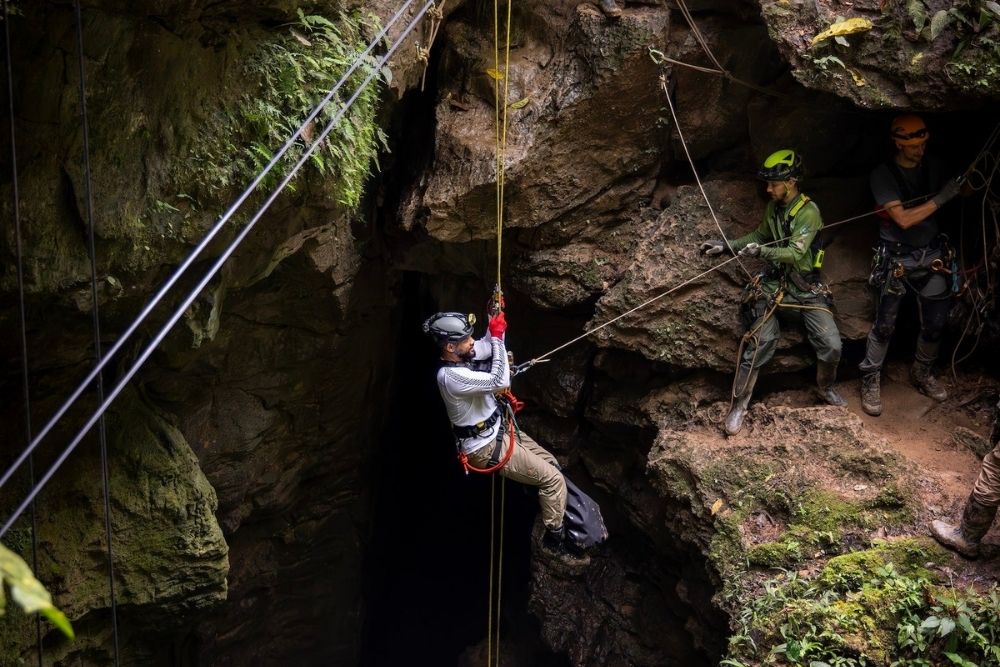
After ascending to the top of one such massive tree, Smith finds himself descending to the very depths of Cueva de los Tayos (Womb of the Earth,” as locals call it). Located in the Amazon about 2.5 hours east of the city of Cuenca, these gaping caverns are a popular spelunking spot. Should you decide to take a tour here, you’ll strap into a harness and lower yourself 206 feet (62 m) into the gaping black maw of the cave.
Several operators offer this guided experience, and if you take the plunge, you’ll find yourself amid the incredible subterranean biodiversity that both fascinates and frightens Smith. Creatures that live in the massive and dark corridors of Los Tayos include cave crickets, giant cockroaches, even bigger tarantulas, and glow-in-the-dark scorpions.
The purpose of showing all these creepy crawlies isn’t merely for shock factor. Accompanying Smith as he ascends trees and descends caves is venomologist Bryan Fry. The animals they encounter potentially hold vast health benefits. For example, the venom of common Amazon animals, from spiders to Brazilian pit vipers, can help create medicines to help millions of people around the world. These medicines can be used to treat high blood pressure, stroke victims, alleviate pain, and more. In fact, episode 2 ends with Bryan Fry extracting the venom from a tranquilized giant tarantula.
Depending on your level of skittishness, this might not be your ideal travel experience; however, it should appeal to any budding naturalist and adventurer.
Episode 3
The river
After focusing on the smaller creatures of the Amazon, episode 3 sees Smith and his team head deeper into the Amazon by river as they search of larger animals—specifically the Ecuadorian anaconda. These snakes can grow 15 to 18 feet (4.5 to 5.5 m), making them the largest of the anaconda species.
The Waorani
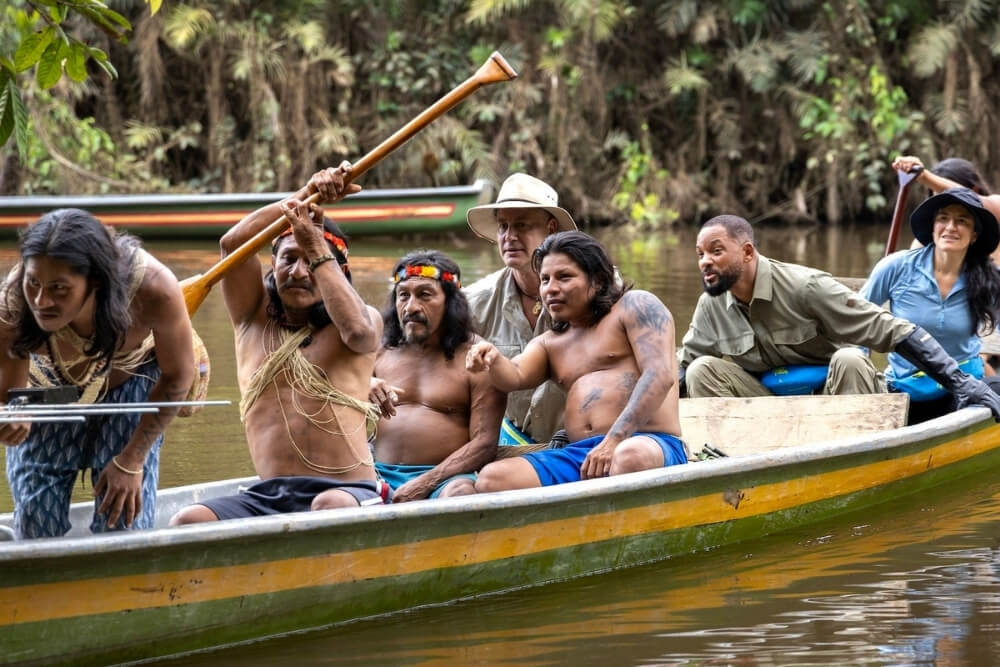
Helping Smith and his team in this search is the Waorani indigenous community. After parking their canoe on the riverbanks, Smith is welcomed by children from this group, who lead him to their nearby village. The Waorani have inhabited this portion of the Amazon for thousands of years, living simply off the land. They are perfectly in tune with the rhythm and DNA of the jungle, making them the ideal experts to assist Smith in his search for the prized anaconda.
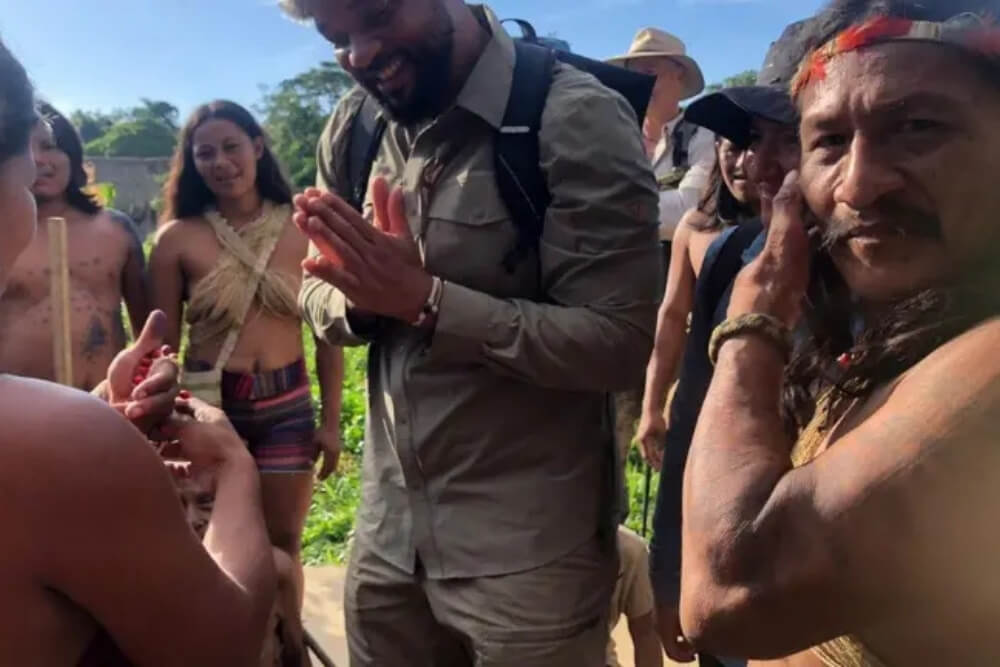
Smith and his team exchange the typical welcome (“Waponi!”) before one of the elders, Penti Baihua, invites the celebrity into his thatched-roof home. It becomes clear immediately that the Waorani people pride themselves on living simply in harmony with the forest. Smith witnesses this pride firsthand when he’s introduced to the community and meets the surrounding wildlife, like macaws, baby tapirs, and friendly howler monkeys. He also witnesses residents hand-weaving palm fibers to make hammocks.
Despite their deeply held traditions, some outside influences (satellite TV, modern clothes, etc.) have made their way into the Waorani community. This was the result of outside missionaries making first contact with the indigenous tribes of Ecuador’s Yasuní National Park region in the 1950s. Despite a friendly initial visit, the encounters with the missionaries (whom many Waorani view as colonists) turned violent. In the intervening years, individual members of the tribe have decided for themselves how much to adapt to the outside world. Some live in a purely traditional manner in native dress, while others opt for modern conveniences and clothing.
Hunt for the green anaconda
Back to the snakes. After watching Bryan wrangle a well-camouflaged vine snake, Smith and the tribe members set off on an Amazon rainforest expedition to a lagoon where they hope to find the massive green anaconda. However, it’s not all stealth and seriousness. The tribemembers teach Smith the finer points of bird calls and how to properly fire a blow dart.
Eventually, while traveling down forest waterways in a canoe, they find a new species of giant anaconda (a whopping 17 feet/5 m) that had previously been tagged with a radio receiver. After the Waorani tribesmen display their prowess at wrangling the animal, Bryan takes a sample in the form of a scale with the goal of measuring the pollutants in the water.
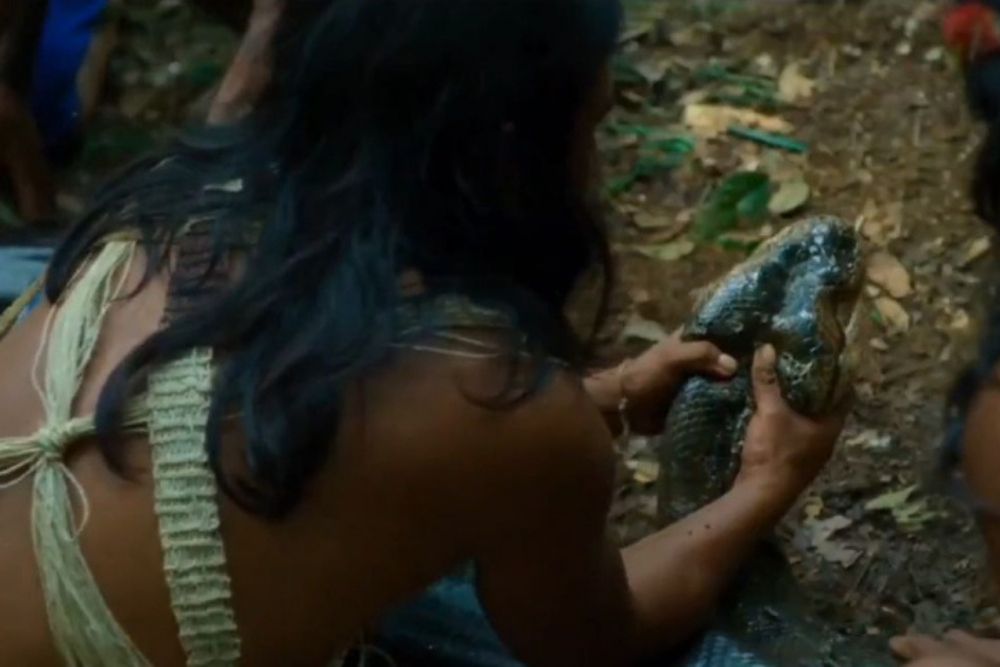
This threat to the fragile forest ecosystem is a running theme throughout the episode. The show makes clear that Smith’s journey is as much about conservation and community as showcasing exotic animals. It makes a point to show the elder Penti Baihua speaking at international forums in support of protecting his forest and culture. In so doing, he all but implores the viewer to do the same.
Into the Wild: Extreme Adventures in Ecuador’s Jungle

 9 Days
 Ecuador


If you’d like to follow in the footsteps of Will Smith and explore the Amazon, or meet local indigenous communities, discover our 5-day Waorani experience in Yasuni National Park.
Ecuadorian Amazon Jungle: FAQs
Where is the Amazon region located in Ecuador?
Ecuador’s Amazon region, known as El Oriente, lies east of the Andes and covers nearly half the country, including provinces like Napo, Orellana, Pastaza, and Sucumbíos.
What is the climate like in Ecuador’s Amazon?
The climate is hot and humid year-round, with temperatures typically between 75–90°F (24–32°C) and frequent rainfall supporting lush rainforest ecosystems.
What wildlife can visitors see in the Ecuadorian Amazon?
Visitors may see monkeys, sloths, pink river dolphins, caimans, parrots, toucans, frogs, insects, and countless plant species during guided jungle excursions.
What activities are popular in the Ecuadorian Amazon?
Popular activities include guided rainforest hikes, canoe trips, wildlife spotting, birdwatching, visiting indigenous communities, and night walks to observe nocturnal species.
How do travelers access the Amazon region in Ecuador?
Most travelers reach the Amazon by flying or driving from Quito to gateway towns like Coca, Tena, or Lago Agrio, then continuing by river canoe or lodge transport.
Further Reading
- 5 Differences Between Yasuni & Cuyabeno
- Wellness in the Amazon Rainforest
- 10 Amazing Facts About The Cotopaxi Volcano
