+593 99 128 3079
 Toll free: +1 866 987 0876


Snorkeling or Diving in the Galápagos Islands: Which is Right for You?
From rental fees to equipment costs and tour lengths, this guide reveals the key differences between snorkeling and diving in the Galápagos to help determine which adventure is right for you.
 Chris Wallace | Updated: August 3, 2026 | Time to read: 9 min

Many know the Galápagos archipelago for the exotic land animals that inhabit its 13 main islands. However, in addition to being a national park, the Galápagos is also a marine reserve that protects 51,350 square miles (133,000 sq km) of open ocean. These waters are a vast underwater menagerie home to tropical fish, sea turtles, giant manta rays, penguins, hammerhead sharks, and much more.
Naturally, the exotic marine animals and great visibility in these tropical waters attract divers and snorkelers from around the globe. But which one is right for you? While you can enjoy both on a Galápagos island-hopping tour, each activity has its own considerations. Below you’ll find everything you need to know to choose the best water activities in the Galápagos.
Table of Contents
Underwater Wildlife
First off, all travelers to the Galápagos should know one thing: it’s not necessary to strap on an oxygen tank and dive dozens of meters beneath the ocean to see exotic marine life here. Even splashing around in the shallows at beaches like Tortuga Bay and Playa Mann, you’re likely to spot tropical fish, rays, and even sea turtles. That means wildlife spotting in the Galápagos is an activity the whole family can enjoy.
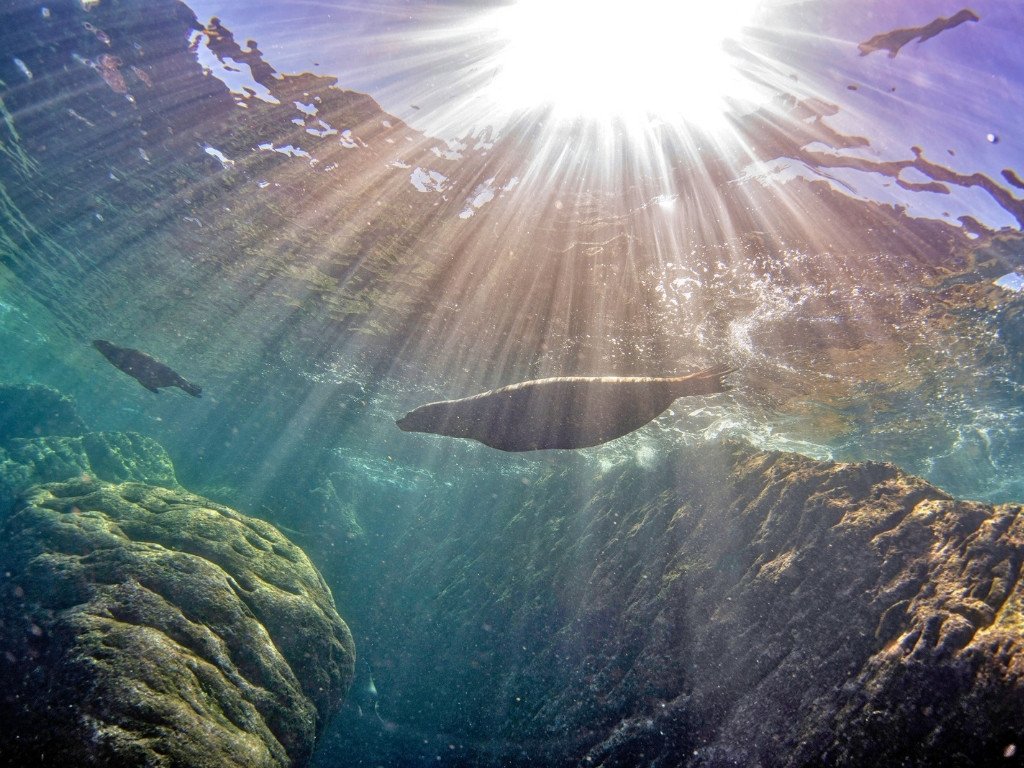
Having said that, other factors, like weather conditions and location, play a role in the variety of wildlife you’ll see. For example, the best visibility for snorkeling or scuba diving in the Galápagos is during the warm, rainy season, which lasts from January to May. Not only is the visibility good during this time, but you can expect warmer water and calmer seas. As for locations, the sheer variety of underwater life you’ll encounter will be greater at popular dive sites like Kicker Rock, Darwin, and Wolf Islands.
Below is a list of common underwater animals you’re likely to spot, whether you’re snorkeling or diving in the Galápagos.
Common Marine Species in the Galápagos Islands
- Galápagos sea lions: Playful and inquisitive, these sea lions are known for underwater acrobatics and friendly interactions with divers and snorkelers.
- Green sea turtles: You’ll usually catch these graceful animals gliding through crystaline waters close to shore as they feed on seagrass.
- Hammerhead sharks: Easily recognizable by their unique hammer-shaped head, the best spots to see these remarkable fish are at dive sites like Darwin and Wolf Islands, where they congregate in schools (most common between July and December).
- Galápagos penguins: The only penguin species north of the equator, look for these flightless birds perched on coastal rocks or zipping through water at remarkable speeds.
- Marine iguanas: Unique to Galápagos, these are one of the iconic animals that inspired Darwin’s famed Theory of Natural Selection. They’re often spotted grazing on algae beneath waves, showcasing impressive underwater foraging skills.
- Manta ray: With enormous wingspans of up to 29 feet (9 m), these gentle giants glide majestically through the water. You’re likely to see them in the northern islands at sites like Darwin and Wold Islands.
- White-tip reef sharks: Locally known as tintoreras, these sharks are named for their distinctive white-tipped fins. They’re commonly found resting on the ocean floor during the day, even near the beach (not to worry; they’re totally harmless).
- Bottlenose dolphins: Known for their intelligence and sociability, you’ll often see them riding the bow waves of boats.
- Spotted eagle ray: Recognizable by their spotted back and elegant movements, this majestic creature is a real prize for underwater photographers. Look for them in shallow coastal waters from December to May.
- Sally Lightfoot crabs: Brightly colored and agile, these critters scuttle along rocky shorelines, tidepools, and in the shallows.
- Tropical fish: The Galápagos are home to a diverse array of fish, including parrotfish, angelfish, and surgeonfish. You’ll often see them swimming in schools along the coast, reefs, and at dive sites throughout the Galápagos.
- Octopuses: Elusive and intelligent, these cephalopods change color and even texture as they move through the depths.
- Whale sharks: These gentle giants (the world’s largest fish) can reach lengths of 55–60 feet (17–18 m). Head to Darwin and Wolf Islands between June and November for your best chance of sighting them.
Ready to Plan Your Journey Through Galápagos?
Whatever you seek from your journey through the Galápagos, our expert travel designers create experiences that connect you with people, nature, and purpose, with every detail handled with care.
Snorkeling vs Diving: Age Restrictions
Snorkeling is an inclusive activity, and there are no age restrictions regarding this family-friendly pursuit. Children as young as 5 or 6 can enjoy snorkeling, either on formal tours or during informal beach time. Just know that basic swimming skills are necessary to ensure safety in the water.
On the other hand, diving in the Galápagos involves stricter age requirements. To join a full-day dive tour, individuals must have Open Water certification with 50 logged dives (recommended). The minimum age for obtaining a PADI (Professional Association of Diving Instructors) certification is 10. Children 10-14 can earn a PADI Junior Open Water certification, which can be upgraded to the standard PADI Open Water certification upon reaching the age of 15.
Snorkeling vs Diving: Cost
It will come as no surprise that the cost of snorkeling is generally more budget-friendly than diving. For example, it’s possible to rent a snorkel and fins from your hotel for around US $5-$15 per day in the Galápagos, while you can expect to pay around $250-$300 for a full-day dive tour. This price disparity is due to the specialized equipment required for diving (regulator, tanks, etc) and the travel to dive sites by boat.
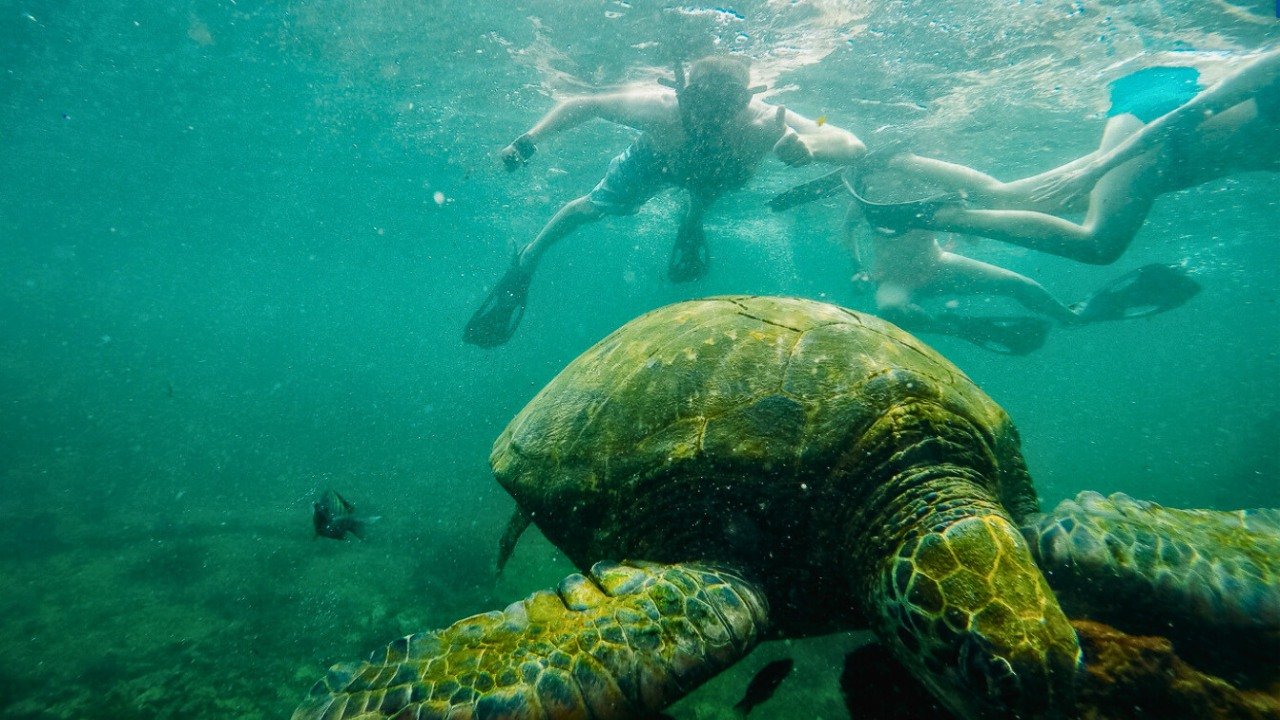
Also, keep in mind, just as with diving, organized snorkeling tours vary in price. Options like the Bay Tour in Santa Cruz are more budget-friendly, costing around $50-$100 per person, while trips to destinations like Los Tuneles in Isabela or Santa Fe Island can cost $150 per person or more.
Snorkeling vs Diving: Time & Effort
While it’s possible to book full-day dive and snorkeling tours in the Galápagos, the duration of your underwater experience will vary depending on the activity. Most underwater outings typically only last around 40 minutes. The rest of the time you’ll spend preparing for the dive itself—i.e., traveling between sites by boat, putting your gear on, conducting buddy checks, decompressing, etc. And speaking of post-dive protocol: as a rule of thumb, divers should wait at least 12 to 18 hours after a single dive (longer for multiple dives or deeper dives) before flying.

Snorkeling, meanwhile, offers a more flexible time frame. If you’re planning to go snorkeling on your own, apart from a tour, your schedule is your own. It’s easy, too, as most publicly accessible beaches throughout the Galápagos have good snorkeling conditions. Just know that the presence of marine life can vary from one location to another.
Snorkeling vs Diving on the Galápagos: The Best of Both Worlds
Once you’ve weighed the cost, the time commitment, and the certification requirements, the good news is that most Galápagos itineraries let you try both. Travelers without a certification who want to add diving to their trip can complete the 6-Day PADI Scuba Course before heading out on the water. From there, a dedicated diving expedition to Darwin and Wolf, a liveaboard cruise built for repeat dives at remote sites, or a San Cristóbal itinerary with snorkeling at Kicker Rock all offer a way into the water, whichever side of the debate you land on.

 7 Days
 Galapagos

In conclusion, if you’re finding it difficult to decide between a snorkeling trip and a dive tour… why choose at all? Opting for both diving and snorkeling allows you to maximize your time in the water, with your only limitations being your budget and diving certification level. To learn more about planning your grand snorkeling/diving adventure in the Galápagos, feel free to reach out to the dedicated specialists at Rebecca Adventure Travel.
Diving vs Snorkeling in Galápagos: FAQs
What is the main difference between snorkeling vs scuba diving in the Galápagos?
The main difference is the depth and the marine life you can see. Snorkeling is done at the surface in shallower waters, while diving allows you to explore deeper areas where a wider variety of marine life, such as sharks and manta rays, can be found.
What are the skill and certification requirements for snorkeling and diving?
Snorkeling requires only basic swimming skills and has no age restrictions, making it an inclusive activity. Diving, on the other hand, has stricter age requirements and requires formal certification before you can participate.
How do the costs compare between snorkeling and diving?
Snorkeling is generally a more affordable activity, as it requires less specialized equipment and fewer guides. Diving is more expensive due to the need for advanced gear, certified guides, and boat trips to specific dive sites.
What marine life can I see while scuba diving vs. snorkeling?
Snorkelers can see a variety of marine life in shallow waters, including sea lions, sea turtles, and marine iguanas. Divers can see all of these as well as a wider spectrum of deeper-water animals, such as hammerhead sharks and various species of rays.
Ready to Plan Your Galápagos Adventure at Sea?
Whether you’re drawn to the sights below the surface or want to explore the Galápagos at your own pace, our destination experts create experiences that connect you with people, nature, and purpose, with every detail handled with care.
Related Posts